- info@hindustangeosystems.com
- Defence Apartment Inder Enclave, Paschim Vihar, New Delhi
Get In Touch
+91-9310825501

Get In Touch
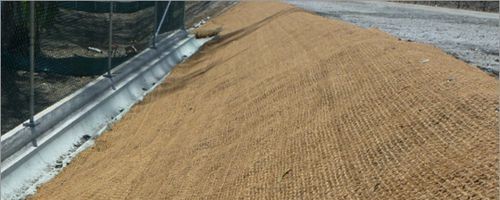
At Hindustan Geo Systems , Brown coir mats are made from natural coconut fibers, primarily used for various environmental and landscaping purposes. Here are the main specializations of brown coir mats
Fiber Type
Made from 100% natural coconut coir fibers (brown).
Weaving Type
Coir fibers are woven or stitched together to form mats, which can be either woven or needle-punched.
Mat Thickness
Typically ranges between 10mm to 25mm, depending on the required application.
Weight
Coir mats usually weigh between 0.5 to 2 kg per square meter (kg/m²), depending on the thickness and density.
Dimensions
Common sizes for coir mats are 1m x 10m, 1m x 50m, and customizable sizes as per project requirements.
Fiber Length
Coir fibers are typically 20 to 30 cm in length.
UV Resistance
Coir mats are generally treated with UV stabilizers to improve resistance to sun degradation. However, without treatment, the mats will biodegrade over time (typically within 1–2 years).
Biodegradability
Coir mats are fully biodegradable, making them an environmentally friendly solution for erosion control and landscaping.
Water Resistance
Coir mats have natural water retention properties, which help prevent soil from washing away while allowing water to drain.
Tensile Strength
Brown coir mats should have sufficient tensile strength to resist breakage and provide adequate stabilization. This is typically around 1,000 to 2,500 N (Newtons) per meter depending on the mat's weight and density.
Water Permeability
Coir mats offer good water permeability (approx. 20-30 cm/s), allowing proper drainage while still holding the soil in place.
Erosion Control
Coir mats can withstand moderate to high rainfall, making them effective in controlling soil erosion in areas with steep slopes or exposed soil.
Root Growth Support
These mats facilitate the growth of vegetation by protecting soil and providing a stable environment for plant roots to anchor, promoting quicker plant establishment.
Soil Erosion Control
Ideal for preventing erosion along riverbanks, slopes, hillsides, and embankments.
Slope Stabilization
Used to stabilize and protect slopes against surface water runoff.
Landscaping
For use in green roofs, garden beds, and public parks to reduce soil erosion and promote plant growth.
Revegetation Projects
Brown coir mats are commonly used for revegetation of disturbed or degraded lands.
Coastal Protection
Used in coastal regions to stabilize dunes and prevent erosion due to tides and winds.
Eco-Friendly
Made from natural coconut husks, these mats are biodegradable and decompose over time, enriching the soil.
Sustainable
Coir is a renewable resource, making it a sustainable option for erosion control and landscaping projects.
Non-Toxic
Coir mats are free from chemicals and toxins, making them safe for plants, animals, and the environment.
Preparation
The surface should be cleared of weeds, debris, and loose soil before installation.
Laying the Mats
Coir mats are typically rolled out on the soil surface and secured with pins or stakes at the edges and along the length of the mat.
Overlapping
Mats should be overlapped by approximately 10 to 15 cm to ensure complete coverage and prevent gaps where soil can erode.
Watering
After installation, the area should be watered regularly to help establish vegetation and maintain mat stability.